
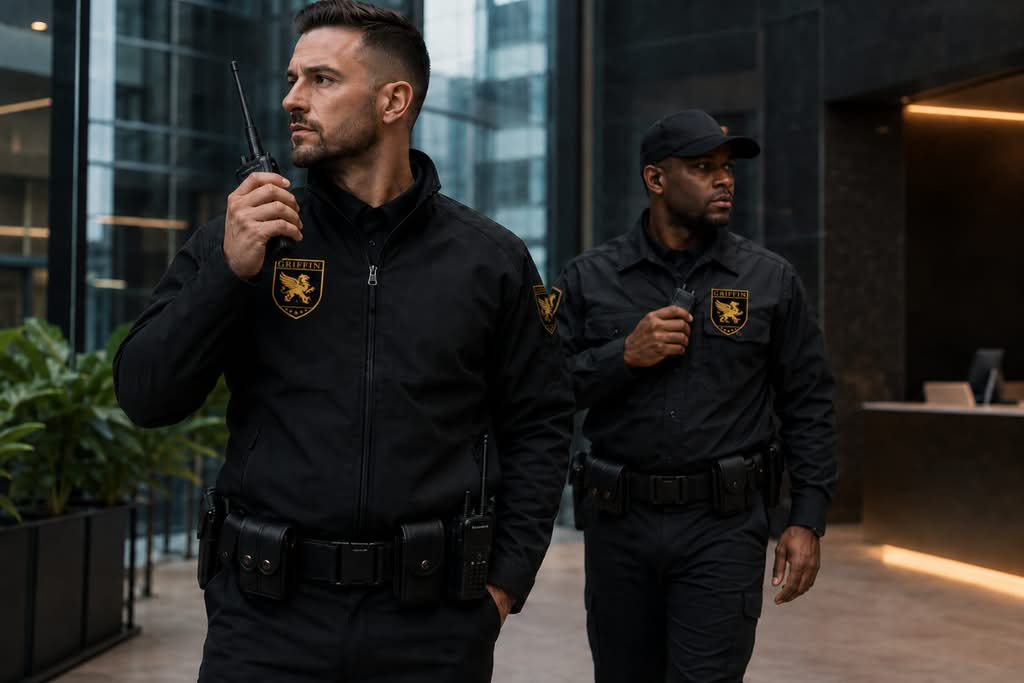
Security officers play an important role in keeping people, property, and business operations safe. Their work goes beyond standing at a door or wearing a uniform. A professional security officer observes activity, controls access, responds to incidents, supports staff, and helps prevent problems before they become serious.
For businesses searching for a security guard company edmonton, understanding what security officers actually do can help you choose the right level of protection for your site. Whether it is a retail store, office building, construction site, residential property, or event venue, trained security officers help create a safer and more controlled environment.
Main Duties and Responsibilities of Security Officers
Security officers perform different duties depending on the property type and risk level. A retail location may need theft prevention and customer support, while a construction site may need patrols, equipment protection, and after-hours monitoring.
Protect People, Property, and Assets
One of the main duties of a security officer is to protect people and property. This can include staff, customers, residents, visitors, vehicles, equipment, inventory, buildings, and restricted areas.
Monitor and Control Access
Security officers often manage who enters and exits a property. They may check visitors, contractors, delivery drivers, employees, guests, or vehicles before allowing access. Access control is especially important for offices, apartment buildings, warehouses, gated areas, construction sites, and commercial properties where unauthorized entry can create safety or liability issues.
Conduct Patrols and Inspections
Patrols help security officers identify problems across the site. They may check parking lots, entrances, hallways, stairwells, loading areas, storage rooms, fences, gates, and common spaces. During patrols, officers may look for unlocked doors, damaged property, suspicious vehicles, safety hazards, signs of break-ins, or unusual activity.
Watch for Suspicious Activity
Security officers are trained to observe behaviour and notice things that may not seem normal. This can include people entering restricted areas, loitering, attempting theft, damaging property, or acting aggressively.
Respond to Emergencies and Incidents
When an incident happens, security officers help manage the situation calmly and professionally. This may include responding to alarms, disturbances, medical situations, fire alerts, break-in concerns, aggressive behaviour, or safety hazards.
Maintain Incident Reports
Clear reporting is an important part of security work. Security officers document what happened, when it happened, who was involved, what action was taken, and whether follow-up is needed.
Support Staff, Visitors, and Customers
Security officers also provide support to people on-site. They may give directions, assist visitors, help staff during difficult situations, manage lines, guide guests, or provide a calm presence during busy periods.
Where Do Security Officers Work?
Security officers work in many different environments. Their duties change based on the location, size, traffic level, and security risks of the property. Common work locations include commercial buildings, retail stores, construction sites, residential buildings, parking lots, offices, events, industrial sites, schools, healthcare facilities, hotels, and public venues.
Skills That Make a Good Security Officer
A good security officer needs more than physical presence. Strong observation skills help them notice unusual behaviour, safety risks, or changes around the site. Good communication helps them speak clearly with staff, visitors, residents, customers, and emergency contacts.
Other important skills include judgment, patience, customer service, conflict resolution, report writing, emergency awareness, professionalism, and CCTV or technology knowledge. These skills help officers respond properly and represent the property in a professional way.
Why Businesses Need Professional Security Officers
Businesses need security officers because security risks can affect safety, property, staff confidence, customer experience, and daily operations. A professional security presence can help reduce theft, vandalism, trespassing, workplace disruptions, and unauthorized access.
Why Choose Griffin Security for Security Officer Services?
Griffin Security provides professional security officer services for businesses, residential properties, retail locations, construction sites, events, and commercial properties in Edmonton, Calgary, and surrounding areas. If you are looking for Security Guard Services Edmonton, the right provider should understand your property layout, operating hours, visitor flow, risk areas, and reporting needs. Griffin Security can help create a custom security plan based on your site instead of using the same approach for every client.
Final Thoughts
Security officers help protect people, property, assets, and daily operations. Their work includes access control, patrols, monitoring, emergency response, incident reporting, staff support, and suspicious activity detection. For businesses, hiring professional security officers can improve safety, reduce risks, and create a more secure environment. If your site needs reliable protection, working with a trusted security guard company edmonton can help you choose the right coverage for your property.
FAQs
Is a security officer higher than a security guard?
In many places, “security officer” and “security guard” are used for similar roles. In some cases, “security officer” describes a more professional or broader role that includes reporting, access control, emergency response, and site coordination.
What not to do as a security officer?
A security officer should not use unnecessary force, ignore site procedures, leave a post without permission, argue with visitors, share private information, or fail to report incidents.