
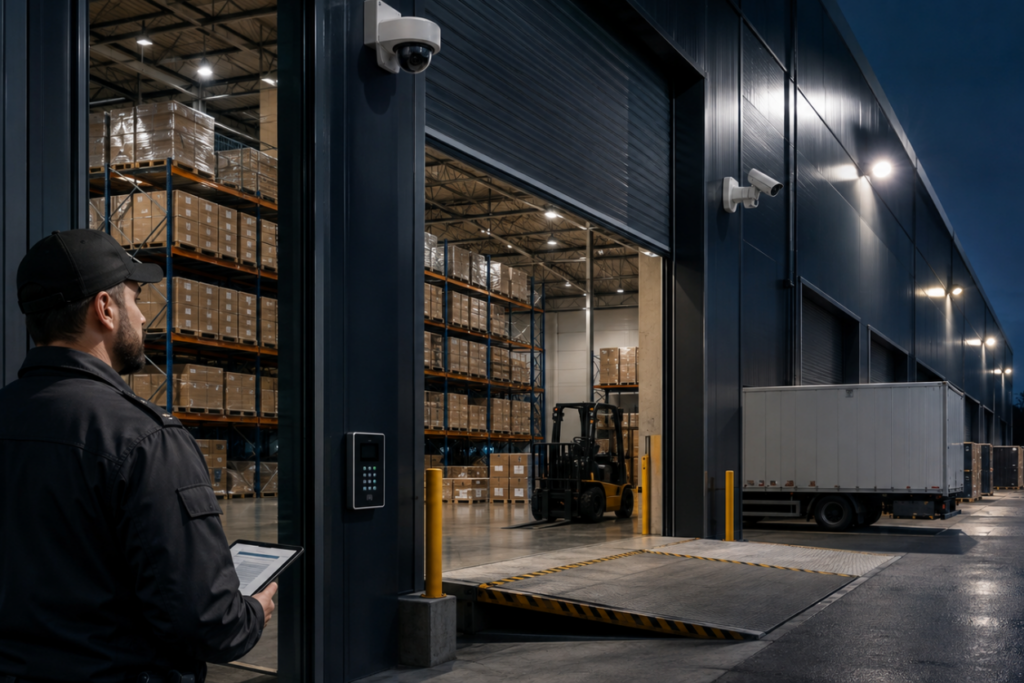
Warehouse Security Best Practices: 12 Practical Ways to Protect Your Facility
Warehouses deal with valuable inventory, constant vehicle movement, employees, contractors, and deliveries throughout the day. That combination creates security challenges that cannot be solved by simply locking the doors at night.
The right warehouse security best practices focus on controlling access, protecting inventory, monitoring activity, securing loading areas, and making sure someone can respond when something goes wrong.
For warehouse owners and facility managers in Edmonton, the security plan should also reflect the actual layout, operating hours, inventory value, and activity around the property. A small storage facility and a busy distribution centre do not have the same security needs.
Why Warehouse Security Needs More Than Cameras
CCTV is useful, but a warehouse needs multiple layers of protection. Access control limits who can enter. Guards and patrols provide a physical presence. Lighting improves visibility. Employee procedures help prevent avoidable mistakes.
The goal is to make unauthorized activity harder to carry out, easier to detect, and quicker to respond to.
A practical warehouse security strategy should cover both the building and the surrounding property.
1. Secure Every Entry and Exit Point
Start with a complete review of the warehouse’s access points.
Check:
-
Main employee entrances
-
Loading dock doors
-
Emergency exits
-
Service doors
-
Vehicle gates
-
Rear entrances
-
Restricted storage areas
Doors should close and lock properly, and employees should understand which entrances they are allowed to use.
Do not focus only on the front entrance. A rear service door or loading area that is regularly left open can create a much larger weakness than a well-secured main entrance.
For warehouses that need dedicated protection, warehouse security services in Alberta can be structured around loading docks, storage zones, employee entrances, and after-hours activity.
2. Use Access Control Based on Job Responsibilities
Not every employee needs access to every part of a warehouse.
Use access controls that match job responsibilities. For example, office staff may not need unrestricted access to inventory storage, while shipping employees may need access to loading areas during specific shifts.
Review:
-
Access cards
-
Keys
-
PIN codes
-
Employee badges
-
Temporary credentials
-
Restricted-area permissions
Remove access when an employee leaves or when a contractor finishes work.
Keeping access permissions current improves accountability and reduces the number of people who can enter sensitive areas.
3. Place CCTV Where It Covers Real Risk
A warehouse CCTV system should be designed around activity, not simply the number of cameras installed.
Priority areas commonly include:
-
Entrances and exits
-
Loading docks
-
Receiving and dispatch areas
-
High-value inventory
-
Parking areas
-
Vehicle gates
-
Exterior perimeter
-
Restricted rooms
Walk through the property and identify blind spots. Shelving, trailers, walls, stacked pallets, and poor lighting can all affect visibility.
Cameras should also be checked regularly for image quality, recording issues, damaged equipment, and changes in the warehouse layout.
For sites where recorded footage alone is not enough, CCTV monitoring services in Edmonton can add live monitoring and a defined response process.
4. Protect Loading Docks and Shipping Areas
Loading and receiving areas deserve special attention because they combine inventory, vehicles, drivers, contractors, and employees in one location.
Create clear procedures for:
-
Driver identification
-
Delivery schedules
-
Shipment verification
-
Vehicle access
-
Contractor entry
-
Loading and unloading
Limit who can enter shipping and receiving areas, and make sure drivers know where they are allowed to go.
This is one of the most practical warehouse security best practices because a busy loading area can become difficult to monitor when too many people have unrestricted movement.
5. Improve Interior and Exterior Lighting
Good lighting makes it easier to see people, vehicles, doors, and activity around the property.
Inspect:
-
Parking lots
-
Loading docks
-
Employee entrances
-
Building corners
-
Storage yards
-
Fence lines
-
Rear service areas
Replace failed lights quickly. Pay particular attention to areas that are difficult to see from the main building or security post.
Lighting also helps CCTV systems produce more useful footage after dark.
6. Protect High-Value Inventory
Not every product inside a warehouse carries the same level of risk.
Identify items that are expensive, easily resold, sensitive, or frequently targeted for loss. These items may require additional controls such as:
-
Restricted storage
-
Extra CCTV coverage
-
Inventory checks
-
Controlled access
-
More frequent patrols
Keep high-value goods away from unnecessary access points where possible.
The objective is not to treat every pallet as a high-security asset. It is to direct stronger controls toward the inventory that would create the greatest loss if it disappeared.
7. Add a Visible Physical Security Presence
A trained security guard can do things a camera cannot. Guards can check people, monitor access, patrol the property, document incidents, and respond to problems as they happen.
Depending on the facility, security guards may be responsible for:
-
Gate access
-
Visitor verification
-
Employee entry
-
Loading-area monitoring
-
Property inspections
-
Incident reporting
When a warehouse requires continuous on-site protection, security guard services in Edmonton can be designed around the facility’s operating schedule and specific risk areas.
The key is having clear post orders so the guard knows exactly what to monitor and how to respond.
8. Use Mobile Patrols for Large or Spread-Out Sites
A large warehouse property may include parking, storage yards, multiple buildings, fences, and remote areas that are difficult to cover from one fixed location.
Mobile patrols can provide regular checks of:
-
Doors and gates
-
Parking areas
-
Perimeter fencing
-
Exterior storage
-
Dark or isolated areas
-
Vehicles and equipment
For Edmonton properties that do not require a guard standing at one post all night, mobile patrol security services in Edmonton can provide visible inspections across the wider property.
Combining scheduled checks with varied patrol timing can also help avoid overly predictable routines.
9. Control Visitors, Contractors, and Delivery Drivers
A warehouse may receive dozens of people who are not regular employees.
Create a simple visitor process that answers:
-
Who is this person?
-
Why are they on site?
-
Who authorized the visit?
-
Where are they allowed to go?
-
When should their access end?
Use visitor logs or temporary identification where appropriate.
Contractors should not receive unrestricted access simply because they have a legitimate reason to be on the property. Their access should match the work they are performing.
10. Train Employees to Recognize Security Problems
Employees are often in the best position to notice something unusual.
Security training should cover:
-
Reporting suspicious activity
-
Protecting access cards and keys
-
Visitor procedures
-
Handling lost credentials
-
Reporting damaged locks or fencing
-
Emergency procedures
Employees should know who to contact and what information to provide when they report a security concern.
Training is especially important in warehouses with multiple shifts because procedures can become inconsistent when teams change throughout the day.
11. Strengthen After-Hours Security
Security requirements change when the warehouse becomes quiet.
After-hours procedures should cover:
-
Locking doors and gates
-
Activating alarm systems
-
CCTV monitoring
-
Exterior inspections
-
Key control
-
Employee access
-
Emergency contacts
Do not rely on one person remembering everything at the end of a shift. Use a written closing procedure and make responsibilities clear.
For businesses that do not want employees travelling to the property after an alarm, key holding security services in Edmonton can provide controlled key management and authorized site response.
12. Secure the Perimeter and Surrounding Property
Warehouse security should not stop at the building walls.
Inspect:
-
Fencing
-
Vehicle gates
-
Parking areas
-
Exterior storage
-
Waste areas
-
Perimeter lighting
-
Adjacent access routes
Repair damaged fencing and gates as soon as possible.
Also pay attention to materials or landscaping that create hidden areas around the property. The easier it is for someone to approach a warehouse without being noticed, the more difficult the rest of the security system has to work.
Create a Warehouse Security Response Plan
Good security is not only about prevention. Your team also needs to know what happens when an incident occurs.
Create procedures for situations such as:
-
Unauthorized entry
-
Suspicious activity
-
Theft
-
Vandalism
-
Forced doors
-
Alarm activation
-
Missing inventory
The plan should identify who is contacted, what should be documented, and when police or emergency services should be involved.
Keep the process simple enough that employees and security personnel can follow it under pressure.
Warehouse Security Checklist
Use this quick checklist during routine inspections:
| Security Area | Checked |
|---|---|
| All entry points secured | ☐ |
| Access permissions reviewed | ☐ |
| CCTV coverage checked | ☐ |
| Blind spots inspected | ☐ |
| Loading docks secured | ☐ |
| Lighting inspected | ☐ |
| High-value inventory protected | ☐ |
| Visitor procedures followed | ☐ |
| Perimeter inspected | ☐ |
| After-hours procedures reviewed | ☐ |
| Security incidents documented | ☐ |
| Emergency contacts updated | ☐ |
Common Warehouse Security Mistakes to Avoid
Relying on CCTV Alone
Cameras can help detect and document activity, but they do not physically control access or investigate every incident.
Ignoring Loading and Receiving Areas
These areas combine inventory and vehicle activity and therefore deserve specific security procedures.
Giving Too Many People Broad Access
Employees and contractors should receive only the access needed for their responsibilities.
Using the Same Security Routine Every Night
Security checks should be structured, but overly predictable routines can reduce their deterrent value.
Failing to Review Security After an Incident
A theft or attempted break-in should trigger a review of access points, procedures, lighting, surveillance, and response.
Choosing the Right Warehouse Security Solution
There is no universal security package for every warehouse.
A smaller facility may need controlled access, CCTV, alarms, and periodic patrols. A large distribution centre may require on-site guards, mobile patrols, live CCTV monitoring, and stronger access controls working together.
The right combination depends on:
-
Property size
-
Inventory value
-
Number of access points
-
Operating hours
-
Staffing levels
-
Previous incidents
-
Outdoor storage
-
Vehicle activity
For logistics operations with large yards or frequent vehicle movement, logistics yard security services can also be part of a broader warehouse and distribution security plan.
Final Thoughts
The most effective warehouse security best practices are practical rather than complicated. Secure the access points, control permissions, monitor important areas, protect the perimeter, train employees, and make sure there is a clear response when something goes wrong.
For Edmonton warehouses, security coverage should match the way the facility actually operates. Some businesses need a permanent guard, while others may benefit from mobile patrols, CCTV monitoring, key holding, or a combination of services.
Regular security reviews are just as important as the original setup. Warehouse layouts, staff, inventory, schedules, and risk levels change, so the security plan should change with them.
A properly designed security strategy can give warehouse owners and managers better control over their property, inventory, employees, and daily operations.
Frequently Asked Questions
What are the best ways to secure a warehouse?
The most useful measures include access control, CCTV, perimeter security, proper lighting, employee training, visitor management, physical security, and regular inspections.
How can I reduce warehouse theft?
Start by controlling access, protecting high-value inventory, securing shipping and receiving areas, monitoring CCTV, training employees, and using appropriate security personnel or patrols.
Do warehouses need security guards?
Not every warehouse needs the same level of coverage. The decision depends on the property’s size, operating hours, inventory, location, and security risks.
Is CCTV enough for warehouse security?
CCTV is an important layer, but it works best alongside access control, physical security, lighting, employee procedures, and a defined response plan.
How often should warehouse security be reviewed?
Review security regularly and whenever there are major changes such as a new layout, increased inventory, new employees, expanded operations, or a security incident.